

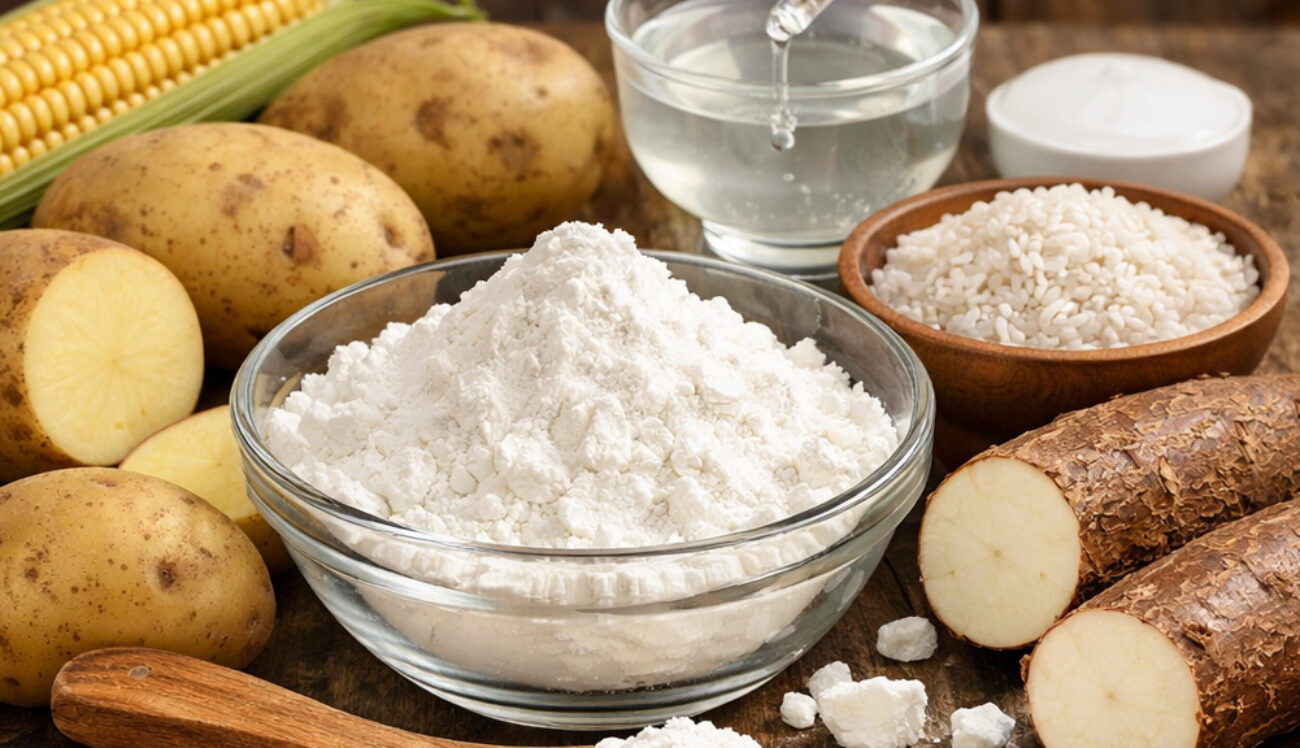
Modified Starch Benefits in Food Applications
Modified starch plays a vital role in modern food production by enhancing the functionality and performance of various products. As consumer expectations continue to evolve, manufacturers are required to deliver food that not only tastes good but also maintains consistent quality, texture, and shelf life. Modified starch, which is processed through physical, chemical, or enzymatic methods, offers improved stability and adaptability compared to native starch, making it an essential ingredient in many food formulations. One of the primary benefits of modified starch is its ability to improve texture and mouthfeel. In products such as sauces, soups, bakery items, and ready-to-eat meals, it helps create the desired consistency while maintaining a smooth and appealing structure. This is especially important in large-scale production, where consistency across batches is critical. By controlling viscosity and gel formation, modified starch allows manufacturers to achieve precise results in their formulations. In addition to texture enhancement, modified starch significantly improves product stability during processing and storage. It is designed to withstand heat, shear, and varying pH conditions, making it suitable for demanding manufacturing environments. This stability helps prevent issues such as ingredient separation, sedimentation, and water release (syneresis), ensuring that the final product maintains its quality over time. Modified starch also contributes to improved processing efficiency. Its functional properties allow for better control during mixing, heating, and cooling processes, reducing production challenges and increasing operational efficiency. This is particularly beneficial for manufacturers aiming to scale production while maintaining consistent product quality. With reliable ingredient performance, companies can reduce waste, minimize rework, and optimize overall production workflows. Beyond technical performance, modified starch supports product innovation in the food industry. It can be tailored through various modification techniques such as cross-linking, acetylation, and hydroxypropylation to meet specific application needs. This flexibility enables manufacturers to develop a wide range of products, from low-viscosity beverages to thick and stable sauces, while maintaining desired sensory characteristics. Ultimately, the use of modified starch provides both functional and commercial advantages for food manufacturers. By partnering with PT. Fukusei Inti Tama, businesses can access high-quality modified starch solutions supported by technical expertise and reliable supply. In a competitive market, leveraging the benefits of modified starch allows manufacturers to deliver products that meet consumer expectations for quality, consistency, and performance while supporting long-term business growth.